Exploring the Role of DNA Methylation in Childhood Adversity and Depression

We are excited to announce that Dr. Alexandre Lussier’s important research, done in collaboration with the Dunn Lab, has been featured in Nature Mental Health. This study explores how DNA methylation, a process that affects the way our genes work, can help explain how childhood adversity (like abuse or neglect) increases the risk of depression. It also identifies how some people may have built-in resilience that helps them overcome challenges.

What is DNA Methylation?

DNA methylation is a natural process that adds tiny chemical tags to our DNA. These tags don’t change the DNA itself, but they can change how our genes are used by the body. Think of it like adjusting the volume on a radio; it doesn’t change the station, but it makes the sound louder or quieter. This process can be affected by things like stress and life experiences, including trauma or difficult situations in childhood.

How Does DNA Methylation Link Childhood Adversity to Depression?

In this study, Dr. Lussier and his team wanted to understand whether DNA methylation can explain why childhood adversity is linked to depression in later life. To do this, they looked at DNA methylation in children at age 7 and compared it to their risk of developing depression by the time they reached age 10.6.

The team found 70 specific DNA sites (parts of the DNA code) that helped explain the connection between early life struggles and later depression. Of these, 39 sites showed a protective effect, meaning they could help explain why some children who go through adversity are able to build resilience and not develop depression. These findings suggest that DNA methylation might not only increase the risk of depression, but also provide insight into how some people are able to resist the harmful effects of childhood trauma.

What Does This Mean for Mental Health?

This research helps us understand how childhood adversity can affect mental health, not just through life experiences but also by changing how our genes work. By identifying specific changes in DNA that are linked to depression and resilience, this study could lead to more personalized treatments for people who are at risk for depression. These treatments could be designed based on each person’s DNA to help reduce the negative impact of early trauma and promote mental well-being.

What’s Next?

Dr. Lussier and his team plan to continue this important research. They want to study other types of childhood adversity, such as neglect or family problems, to see how these experiences affect DNA and resilience. They also want to explore whether genetic factors might influence how DNA methylation works, which could make it possible to create even more personalized treatments for mental health.

To read the full article, visit: Nature Mental Health Article Link.
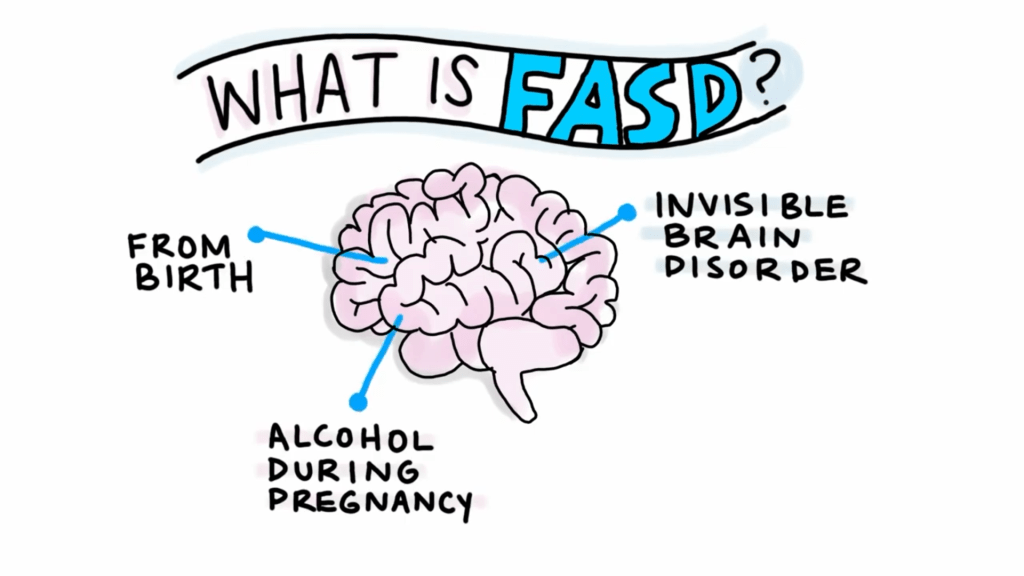
What are Fetal Alcohol Spectrum Disorders (FASD)?

By Emma Kohrt

Prenatal alcohol exposure poses considerable risks to the physical, behavioral, and cognitive health of children. Fetal Alcohol Spectrum Disorders (FASD) are an assortment of serious conditions that occur due to alcohol exposure in pregnancy and can persist throughout the lifetime. FASD is one of the leading causes of developmental disabilities and birth defects in the United States and worldwide.1 Recent studies indicate that approximately 10% of pregnant women worldwide consume alcohol1 and 1-5% of school-aged children in the United States may have FASD.2 The consequences of prenatal alcohol exposure vary based on several factors, including the levels of alcohol exposure during pregnancy, the timing and duration of exposure, genetics, environmental influences, other substance use, etc.1 However, no safe level of alcohol consumption during pregnancy has been established.

FASD refers to a range of disorders that are classified based on symptomatology and the extent of alcohol exposure. Fetal Alcohol Syndrome (FAS) is the most severe manifestation of FASD and can result from high levels of alcohol exposure and binge drinking during pregnancy. FAS results in both physical and neurological impairments, such as abnormal facial features, small head size, learning disabilities, vision or hearing problems, language delays, and poor coordination.3 Individuals with Partial Fetal Alcohol Syndrome (pFAS) exhibit only some of the diagnostic features of FAS. Alcohol-Related Birth Defects (ARBD) and Alcohol-Related Neurodevelopmental Disorders (ARND) are manifestations of FASD without overt facial dysmorphologies or growth deficits.3 Individuals with ARBD can have problems with their heart, kidneys, bones, or hearing, and those with ARND may have issues with behavior and learning and have intellectual disabilities.4 Finally, Neurobehavioral Disorder associated with Prenatal Alcohol Exposure (ND-PAE) is similar to ARND except that individuals with ND-PAE may or may not have physical dysmorphologies, while those with ARND cannot have physical dysmorphologies due to alcohol exposure.4

Only 10% of people with FASD have physical dysmorphologies, which contributes to the frequent misdiagnosis or underdiagnosis of FASD.5 Individuals with dysmorphologies due to FASD often face stigma associated with these disorders. People with FASD can be seen as a burden on society due to their medical needs or as lazy due to their cognitive and mental disabilities. Many individuals also self-stigmatize and internalize negative beliefs, impacting their self-confidence. Parents of children with FASD are often stigmatized as well and blamed completely for drinking during pregnancy without the consideration of social or environmental factors.5 There are many types of stigmas associated with FASD and prenatal alcohol use, which are further explored here: Ethical considerations for biomarkers of fetal alcohol spectrum disorder and other neurodevelopmental disorders.

Many individuals with FASD have co-occurring physical and mental illnesses. People with FASD can have physical illnesses such as kidney failure, heart defects, joint issues, and epilepsy.6 There are also increased risks of cognitive disorders and mental illnesses such as depression, ADHD, anxiety, and conduct disorders. Over 90% of individuals with FASD have mental health issues, with 50% reporting depressive symptoms.7 Recent studies show linear relationships between the amount of alcohol exposure during pregnancy and increased risks of depression and internalizing disorders among adolescents. Binge drinking, which is the consumption of 5 or more drinks for men or 4 or more drinks for women within 2 hours,9 is also associated with increased risks of mental disorders in offspring. A recent meta-analysis found that offspring with PAE were more than twice as likely to have depressive symptoms (OR = 2.28) than those without PAE.8 However, much remains unknown about precisely how prenatal alcohol exposure affects the mental health of children and adults. To learn more about our projects investigating the impact of prenatal alcohol exposure on mental health, please refer to Sensitive Periods for the Effects of Prenatal Alcohol Exposure.


References

  1. Popova, S., Charness, M.E., Burd, L. et al. Fetal alcohol spectrum disorders. Nat Rev Dis Primers 9, 11 (2023). https://doi.org/10.1038/s41572-023-00420-x
  2. May, P. A., Chambers, C. D., Kalberg, W. O., Zellner, J., Feldman, H., Buckley, D., Kopald, D., Hasken, J. M., Xu, R., Honerkamp-Smith, G., Taras, H., Manning, M. A., Robinson, L. K., Adam, M. P., Abdul-Rahman, O., Vaux, K., Jewett, T., Elliott, A. J., Kable, J. A., Akshoomoff, N., … Hoyme, H. E. (2018). Prevalence of Fetal Alcohol Spectrum Disorders in 4 US Communities. JAMA319(5), 474–482. https://doi.org/10.1001/jama.2017.21896
  3. Basics about FASDs. (2023, October 3). Centers for Disease Control and Prevention. https://www.cdc.gov/ncbddd/fasd/facts.html
  4. Fetal Alcohol Spectrum Disorder Assessment. (n.d.). https://www.aap.org/en/patient-care/fetal-alcohol-spectrum-disorders/fetal-alcohol-spectrum-disorder-assessment/
  5. Lussier, A. A., & Weinberg, J. (2023). Ethical considerations for biomarkers of fetal alcohol spectrum disorder and other neurodevelopmental disorders. In Developments in neuroethics and bioethics (pp. 165–202). https://doi.org/10.1016/bs.dnb.2023.05.003
  6. Jonsson E. (2019). Fetal Alcohol Spectrum Disorders (FASD): A Policy Perspective. Canadian journal of psychiatry. Revue canadienne de psychiatrie64(3), 161–163. https://doi.org/10.1177/0706743718773706
  7. Famy, C., Streissguth, A. P., and Unis, A. S. (1998). Mental illness in adults with fetal alcohol syndrome or fetal alcohol effects. Am. J. Psychiatry 155, 552–554. doi: 10.1176/ajp.155.4.552
  8. Zhang, X., Liu, Y., Li, J., Li, B., Yang, X., Sun, Q., Yan, J., Wang, Z., & Liu, H. (2022). Prenatal Alcohol Exposure and the Risk of Depression in Offspring: a Meta-Analysis. International journal of clinical practice2022, 5458611. https://doi.org/10.1155/2022/5458611
  9. Binge drinking | CDC. (n.d.). https://www.cdc.gov/alcohol/fact-sheets/binge-drinking.htm

Dr. Lussier’s MQ Fellows Award Interview

Dr. Alexandre Lussier was recently interviewed by the MQ Foundation, a global non-profit that invests in vital research needed to detect, prevent, and treat mental illness.

Dr. Lussier was awarded a prestigious MQ Fellowship in 2023 to support his work examining the timing of depression during childhood and adolescence as a risk factor for suicide. The goal of the project is to identify sensitive periods when depression has a greater impact on suicide risk, as well as genetic and epigenetic mechanisms that can be leveraged to better predict risk for mental illness and develop more timely and targeted intervention strategies.

In his interview with the MQ Foundation, Dr. Lussier shares more about his scientific career trajectory thus far, his personal connection to mental health research, and the importance of investing in research to improve our understanding of mental health conditions and treatments.

You can check out the full interview here.

Congratulations, Alex, on this exciting fellowship!